Fire Alarm Categories Explained: Which BS 5839 System Does Your Building Need?
Published 29 September 2026 · Updated 29 September 2026 · By Dan, ElectriVolt
A quote that says “fire alarm to BS 5839-1” and nothing else has not actually told you what you are buying. The standard defines eight different fire alarm categories, from a handful of break-glass points on the walls to automatic detection in every cupboard and ceiling void, and the phrase on its own could mean any of them.
The Fire Industry Association puts it bluntly: a reference to BS 5839-1 without a system category is “virtually meaningless”. This guide walks through what each category means, which buildings typically end up with which, and who is supposed to make the call.
What are the fire alarm categories in BS 5839-1? There are eight. Category M is a manual system with call points and sounders but no automatic detectors. Categories L1 to L5 add automatic detection to protect life, from whole-building coverage (L1) down to a specific, defined purpose (L5). Categories P1 and P2 add detection to protect property rather than people.
Why fire alarm categories exist at all
Categories first appeared in BS 5839-1 in 1988, when they were called “types” of system. L4 and L5 were added in 2002, and the definitions have not changed since. The current edition, BS 5839-1:2025, came into effect on 30 April 2025 and the 2017 edition was withdrawn the same day.
The point of a category is to answer one question before anyone draws a detector on a plan: what is this system actually for? Getting people out of a building that is awake and working is a different job from waking people who are asleep. Both are different again from protecting stock in a warehouse at 3am when nobody is there at all.
Once the purpose is clear, the category fixes where detection goes. That is why it has to be decided first, and why every other part of the design hangs off it.

The eight categories, one at a time
Category M — manual
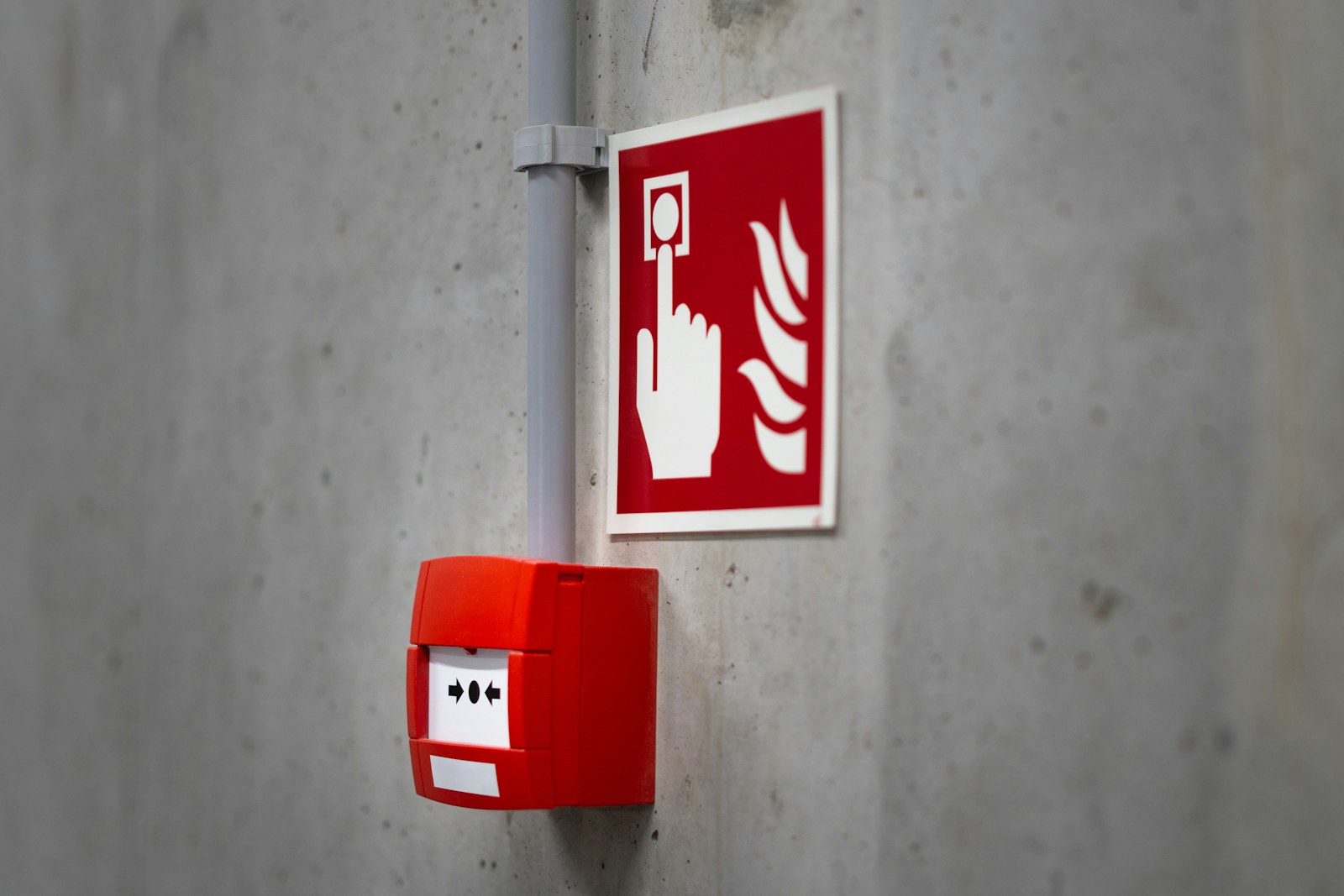
No automatic detectors at all. The system is raised by a person operating a manual call point, and sounders (and any visual alarm devices) warn everyone else. It relies on someone being awake, present and noticing the fire.
That sounds basic, but it is the right answer for a lot of buildings. The 2025 standard also simplified call point spacing: nobody should have to travel more than 45 metres along their actual route to reach one.
Category L1 — detection throughout
Automatic detection in all areas of the building. This is the highest level of life protection and is typical where people sleep and a fire anywhere could threaten them.
Category L2 — L3 plus defined high-risk rooms
Everything an L3 system covers, plus additional rooms where a fire is especially likely to start or where the risk to life would be especially high. The specification has to name those extra rooms. “L2” on its own is incomplete.
Category L3 — escape routes and the rooms opening onto them
Designed to warn everyone early enough to escape before smoke makes the escape routes impassable — everyone, that is, except possibly the people in the room where the fire started. Detectors go in the escape routes and in the rooms that open onto them.
Category L4 — escape routes only
Detection in the circulation parts of the escape routes: corridors and stairways. It is the least commonly specified L category, because warning people only once smoke reaches the corridor is usually too late where anyone is asleep.
Category L5 — a specific fire safety objective
Detection placed to solve one particular problem that the other categories do not describe. A classic example is an inner room, where the only way out is through another room. A single smoke detector in that access room can stand in for a vision panel, so someone in the inner room is warned of a fire they cannot see.
Categories P1 and P2 — property protection
P1 puts detection throughout the building; P2 only in defined areas. The aim is early warning so a fire can be tackled before it destroys the building or stops the business trading. These categories are often a requirement of the property insurer rather than of fire safety law.
Categories combine. A building can carry more than one at once, written with a slash. An office with call points throughout and smoke detection in its server room might be specified as Category M/P2. A shop with call points plus a single detector covering an inner room would be M/L5.
Which category does your building need?
BS 5839-1 includes an informative table, reproduced in the FIA’s category guidance, showing what is typically installed in different premises. It describes custom and practice rather than laying down rules, but it is where most specifications start.
- Offices, shops, factories, warehouses and restaurants: typically M, or M combined with P2 or P1 where insurers or the business want property cover. A manual system can normally satisfy the legislation in a workplace where nobody sleeps.
- Hotels, hostels, student accommodation and houses in multiple occupation: L1 or L2. Bedroom areas are designed around L3 principles, but detectors go in almost every other area as well, so in practice the result is often effectively L1.
- Pubs with living accommodation above: L2. A large pub with nobody sleeping on site is more often M, sometimes with P2 over a busy kitchen.
- Residential care premises: L1.
- Buildings using phased evacuation: at least L3, because the floors still in the building rely on early warning.
- Small places of assembly holding fewer than about 300 people: typically M.
- Buildings where fire doors are held open on magnetic releases: M/L5, with detectors sited so smoke cannot pass through the open doors before they release.
The pattern is the thing to take away. Whether anyone sleeps in the building is the single biggest factor. A workplace where everyone is awake and can smell smoke usually needs a manual system and good procedures. A building where people sleep needs automatic detection that will wake them.
Who decides — and why it should not be your electrician
This is the part most guides skip, and it is the part that causes the arguments later.
The FIA is clear that choosing the category is the job of the fire safety specialist — the fire risk assessor, fire engineer, building control or the enforcing authority — and not the fire alarm designer or installer. Those two roles have a deliberate firewall between them. The risk assessor decides what the building needs; the installer designs and builds a system that delivers it.
The 2025 edition of the standard backs that up. If the fire and rescue service, an insurer or the purchaser has stipulated a category, that is the category used. If the designer has not been told one, they have to make clear to the purchaser which category their design meets, so the purchaser can check it matches the fire strategy before anything is ordered.
So our honest advice runs slightly against our own interest: be wary of any installer who picks a category without asking to see your fire risk assessment. Too low, and the system may not satisfy the fire safety officer. Too high, and you pay for detection you do not need, maintain it forever, and give yourself more devices that can false-alarm. Ask for the category in writing, and ask where it came from.
What changed in 2025 that affects category choice
The eight categories are unchanged, but a few recommendations inside them moved.
- Sleeping rooms now prefer smoke detection. Earlier editions accepted heat detectors in bedrooms. The 2025 edition recommends smoke, multi-sensor or carbon monoxide fire detectors instead, unless the fire risk assessment justifies heat detection, because heat detectors react too slowly to protect someone asleep in that room.
- It is not retrospective. Existing hotel bedrooms with heat detectors do not have to be ripped out. The preference applies when a system is substantially replaced or extended.
- Variations must be written down. Every departure from the standard now goes in the system logbook, not only “major” ones, and leaving out a zone plan is listed as an unacceptable variation.
If your system was designed under an older edition, none of this makes it illegal overnight. It does mean the next significant alteration is the moment to bring the detection in sleeping areas up to date.
New buildings versus existing ones
In a new building, the fire alarm is driven by the Building Regulations and the guidance in Approved Document B, which points directly to BS 5839-1. The category is normally set as part of the fire strategy submitted to building control, so it should already be written down somewhere.
In an existing building, the driver is the fire risk assessment required under fire safety law. The assessment decides what level of warning the building needs, and the category follows from that. If your risk assessment says “fire alarm to BS 5839-1” without a category, it is worth going back to the assessor and asking them to finish the sentence.
Houses and flats are a separate case. Detection in domestic dwellings is covered by BS 5839-6, which uses its own system of grades and categories rather than the eight above. Houses in multiple occupation sit across both: the communal system is effectively a BS 5839-1 system, while each unit also has its own domestic smoke alarms.
A practical way to use this
If you are looking at an existing panel and wondering what you have, check the logbook and the original commissioning certificate. Both should state the category. If neither does, that gap is worth closing before your next fire safety inspection.
If you are planning a new system or an extension, get the category from your fire risk assessment first, then ask for quotes against it. It makes quotes directly comparable, stops contractors quietly designing to different standards, and gives you something concrete to point to if a fire safety officer ever asks why the building is protected the way it is.
For the wider picture — what the law actually requires of the person in control of the premises and how often each system should be tested — see our guide to what UK business premises are legally required to test.
Common questions
What is the difference between an L1 and an L2 fire alarm?
An L1 system has automatic detection in every area of the building. An L2 system covers the escape routes and the rooms opening onto them, like an L3, plus specific additional rooms named in the specification because a fire is likely to start there or would be especially dangerous. In buildings with many small rooms, the two can end up very similar.
What fire alarm category does an office need?
Typically Category M, a manual system with call points and sounders, because the people in an office are awake and can raise the alarm themselves. Insurers sometimes add a P2 or P1 requirement for property protection, and lone working out of hours can justify limited automatic detection. Your fire risk assessment is what confirms it.
What fire alarm category does an HMO need?
Under BS 5839-1 practice, premises with sleeping accommodation such as HMOs, hostels and student housing are typically L1 or L2. Many smaller HMOs are designed under BS 5839-6, the domestic standard, with a communal system plus smoke alarms in each unit. The local authority’s housing team and your fire risk assessment set the requirement.
Who is responsible for choosing the fire alarm category?
The fire safety specialist, such as a fire risk assessor, fire engineer, building control or the fire and rescue service. The fire alarm designer or installer builds to the category they are given, and if they are not given one, BS 5839-1 expects them to state in writing which category their design meets.
Know your category and need it installed or extended?
Send us your fire risk assessment or specification and we will design and quote against it, so you are comparing like with like. Free quotes, no callout charge.
Talk to ElectriVolt, or read more about our fire alarm installation and servicing.


