Escape lighting that works when it’s needed.
Emergency lighting designed, installed and tested for commercial premises, HMOs and communal areas — including the monthly and annual testing that keeps the logbook straight.

What it’s actually for
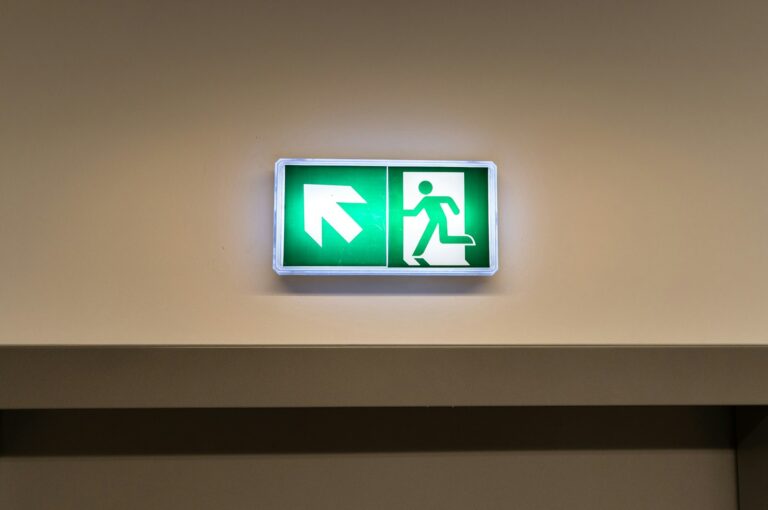
Emergency lighting exists so people can leave a building safely when the normal supply fails. That means it isn’t about lighting the room — it’s about lighting the route: corridors, stairs, changes of level, final exits, and the points where fire equipment and call points are.
The standard for the UK is BS 5266. In practice the questions are where luminaires go, how long they must run for, and how you prove they still work.
Three hours or one
Most premises are specified for three hours’ duration, which covers evacuation and any subsequent re-entry by responders. One-hour systems exist but are only appropriate in limited circumstances. If you’ve inherited a system and don’t know which you have, that’s worth establishing.
Maintained or non-maintained
A non-maintained fitting is dark until the supply fails. A maintained fitting is lit all the time and stays lit on battery. Exit signs are usually maintained; corridor luminaires in a building that’s empty at night are often non-maintained. Getting this wrong is a common and expensive specification error.
Testing is the part that gets missed
An emergency lighting system that hasn’t been tested is a system nobody can rely on, and the batteries are the part that quietly fail.
- Monthly: a short function test — every luminaire simulated into emergency mode and confirmed to illuminate.
- Annually: a full-duration test, running the system for its rated time and confirming everything is still lit at the end.
- Always: results recorded in a logbook, with failures repaired and re-tested.
The annual test is the one that finds tired batteries, because a fitting can pass a five-second flick test and die after twenty minutes. We can run the testing for you and keep the record, or set it up so your own staff can do the monthly checks and we handle the annual.
Inherited a building with emergency lighting and no paperwork? Start with a full-duration test rather than a visual check. It tells you which fittings are genuinely serviceable, and that’s the honest baseline for a logbook.
Where it’s needed
Commercial premises, HMOs, blocks of flats with communal areas, and any workplace where a supply failure would leave people finding their way out in the dark. It usually sits alongside fire detection, and both tend to be looked at together at licensing or insurance renewal — see maintenance if you’d rather it was simply handled on a schedule.
Things people ask
How often does emergency lighting need testing?
A short function test monthly and a full-duration test annually, with results recorded in a logbook. The annual test is the one that finds failing batteries.
How long must the lights stay on?
Most premises are specified for three hours. One-hour systems exist for limited situations. If you don’t know which you have, a full-duration test establishes it.
Do we need it in a block of flats?
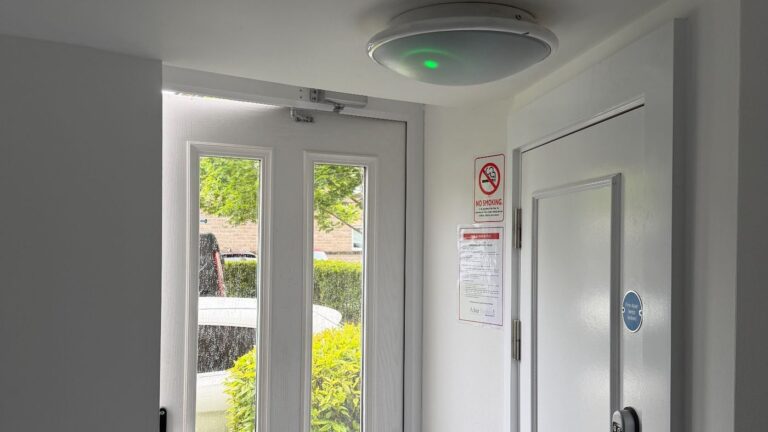
Communal areas — stairs, corridors, entrances — normally do. Inside individual flats, no. The fire risk assessment for the building is what determines the extent.
Can you take over testing on an existing system?
Yes. We’d start with a full-duration test to establish what’s actually serviceable, then run the schedule and keep the logbook from there.
Other work we take on.
Guides on Emergency Lighting.
 How Often Should Emergency Lights Be Tested? Monthly, Annual and the Log BookA monthly functional test, an annual full-duration test and a log book that records both. How to do each one…1 October 2026 · 8 min read
 Fire Alarm and Emergency Lighting: What UK Business Premises Are Legally Required to TestThe law says keep them in working order, not how often to test. What UK business premises must actually do…24 September 2026 · 9 min read