Do You Need an EICR to Sell a House? What Buyers and Solicitors Actually Ask For

Published 20 October 2026 · Updated 20 October 2026 · Reviewed and signed off by ElectriVolt
Nobody has to hand over an Electrical Installation Condition Report (EICR) to sell a house in England. What catches sellers out is the paperwork they were never told to keep: the certificates for electrical work done years ago, which the buyer’s solicitor asks for on a standard form.
So the useful question is not “do I need an EICR?” but “what will I be asked, and what can I hand over?”. This guide answers both, and says when having an inspection done before you list is worth it.
Do you need an EICR to sell a house? No. The Law Society says an EICR is not a legal requirement when selling in England and Wales. Your buyer’s solicitor will still ask on the TA6 form whether you have one, and for certificates covering any electrical work done at the property. Those certificates are the paperwork to find first.
What the rule actually is
The legal EICR duty that gets quoted most falls on landlords. The Law Society’s explanatory notes to the TA6 form state it directly: an EICR is not a legal requirement for the sale of property in England and Wales. The same notes point out that a landlord must hold a current report when letting, and that a buyer taking on a let property will want to see one.
That is why so many pages online give conflicting answers. A seller selling a home they live in has no duty to commission a report. A seller with tenants in the property is in a different position, which we cover below.
What the buyer’s solicitor will ask: section 11 of the TA6 form
When you sell, your solicitor asks you to complete the Law Society’s TA6 Property Information Form. Its 6th edition (2025) has an “Electrical systems” part in section 11, with three questions:
| TA6 question | What it asks | What to have ready |
|---|---|---|
| 11.1 | Are you aware of any electrical installation works carried out at the property, and when? | A rough list of work done since you owned it: rewires, new circuits, a new consumer unit, an EV charger |
| 11.2 | Does the property have any certificates for electrical installation works? | Copies of every certificate you can find, attached to the form |
| 11.3 | Does the property have an EICR? | A copy if you have one. If you do not, “No” is a valid answer |
Notice what is and is not being asked. Two of the three questions are about past work and the paperwork for it. Only one is about an EICR, and it is a yes-or-no question, not a demand. If you are not sure how to answer, the Law Society’s notes tell sellers to speak to their solicitor.
The certificates that matter more than an EICR
The Law Society’s notes say that from 1 January 2005 all electrical installation work in a home must follow the building regulations. They also say that since April 2013 the range of certification has been reduced, so some kitchen and outdoor work no longer needs a certificate at all. For most other work, there should be one of these:
- A building control completion certificate.
- The installer’s Building Regulations Compliance Certificate.
- A BS 7671 Electrical Installation Certificate.
The work the Law Society lists as needing this includes new circuits, replacing a consumer unit or fuse box, rewiring in outbuildings and gardens, altering or adding to a circuit in a special location such as a bathroom, and installing an EV charging point. The government’s Approved Document P sets out which electrical work is notifiable in England.
If you had a consumer unit replaced or a charger fitted since 2005, the certificate for that job is the document a buyer’s solicitor is most likely to want.
Our view: before you spend anything on an inspection, spend an hour finding paperwork. Look through the folder from when you bought, any emails from tradespeople, and the box in the cupboard under the stairs. A certificate for a past rewire or consumer unit answers more of a buyer’s questions than a fresh report will.
What if you cannot find a certificate?
It happens often. Work was done by a previous owner, a company has closed, or the paperwork went in a skip. A sensible order of attack:
- Ask whoever did the work. An installer who issued a certificate should hold a copy, even years later.
- Check your own records, including the sale pack from when you bought, which may include certificates from the previous owner.
- Tell your solicitor early. They know how buyers’ solicitors usually deal with a missing certificate, and it is far easier to explain it up front than mid-sale.
- Consider an inspection if you want to show the current condition of the installation.
That last point needs care. An inspection report describes how the installation is today. It does not stand in for a missing certificate for the original work, because it does not show who did the job or whether it was notified.
When an EICR before listing is worth having
An EICR is not compulsory, but there are sensible reasons to want one:
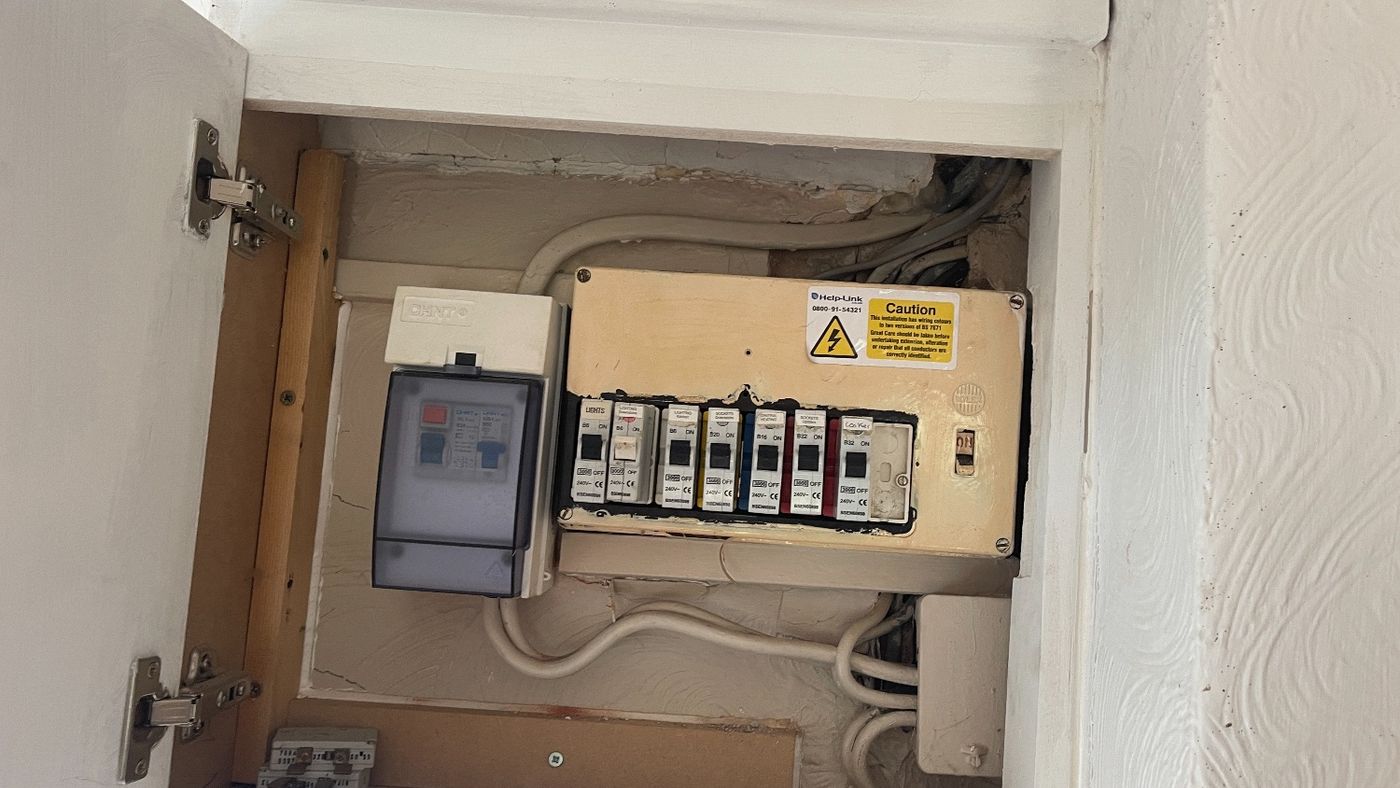
- The installation is old or its history is unknown. Rewireable fuses, a brown fuse box or a patchwork of extensions are things a buyer’s survey may flag. Knowing first lets you choose how to respond.
- You are not sure what a buyer would find. Better to learn it before an offer than during a renegotiation.
- The buyer is likely to let the property. A buyer-landlord will want to see the electrics are in order from day one.
The trade-off is real, though. TA6 question 11.3 asks whether you have a report and asks for a copy. A report that finds faults is then part of the sale information, so you will need to decide whether to put things right before listing. Our guide to what an unsatisfactory report means explains how to read the result if you get one.

Selling a property with tenants in it
If the property is being sold subject to a letting, the position changes. The Law Society notes that a buyer who intends to let, or who inherits a tenant, will want to check there is a current EICR and that it has been given to the tenant. If you are the landlord-seller, make sure the report is in date before the buyer asks. Our guide to how often a rented property needs an EICR covers the timing rules.
A short checklist before you list
- Write down every electrical job you know of since you bought: rewires, new circuits, consumer unit, charger, outside lighting.
- Find the certificates for each and keep them together in one folder.
- Look at your consumer unit. A very old board raises questions a certificate cannot answer. Our post on RCBO and split-load consumer units explains what a modern one looks like.
- Decide whether to commission an inspection now or leave it unless a buyer asks.
- Answer TA6 section 11 truthfully, and ask your solicitor if a question is unclear.
If you would like the installation checked before you list, our EICR service covers homes across Sheffield and the surrounding area.
Common questions
Is an EICR a legal requirement when selling a house?
No. The Law Society’s guidance on the TA6 form says an EICR is not a legal requirement for the sale of property in England and Wales. The legal requirement for an EICR sits with landlords letting a property, not with sellers.
Will my buyer’s solicitor ask for an EICR?
They will ask about it. Question 11.3 of the Law Society’s TA6 Property Information Form asks whether the property has an EICR and, if it does, for a copy. “No” is a valid answer to that question.
What electrical certificates do I need to sell my house?
Any certificates for electrical installation work carried out at the property, if you have them. The Law Society says most electrical work needs a building control completion certificate, the installer’s Building Regulations Compliance Certificate, or a BS 7671 Electrical Installation Certificate. Attach whichever you have to the TA6 form.
What if I have lost the certificate for work done on my house?
Start with the company or electrician who did the work, as they should hold a copy. If that fails, tell your solicitor early and ask how they want it handled. An inspection can report the installation’s current condition, but it does not replace the certificate for the original work.
Not sure what your electrics will show?
We can inspect and test the installation and give you a plain-English report before you list, so nothing surprises you mid-sale. Free quotes, no callout charge.
Talk to ElectriVolt, or read more about our EICR and electrical inspection service.


