High-current circuits, sized and protected.
Electric showers and immersion heaters are among the largest loads in a house. Both need a dedicated circuit sized properly — not the one the old, weaker unit was running on.
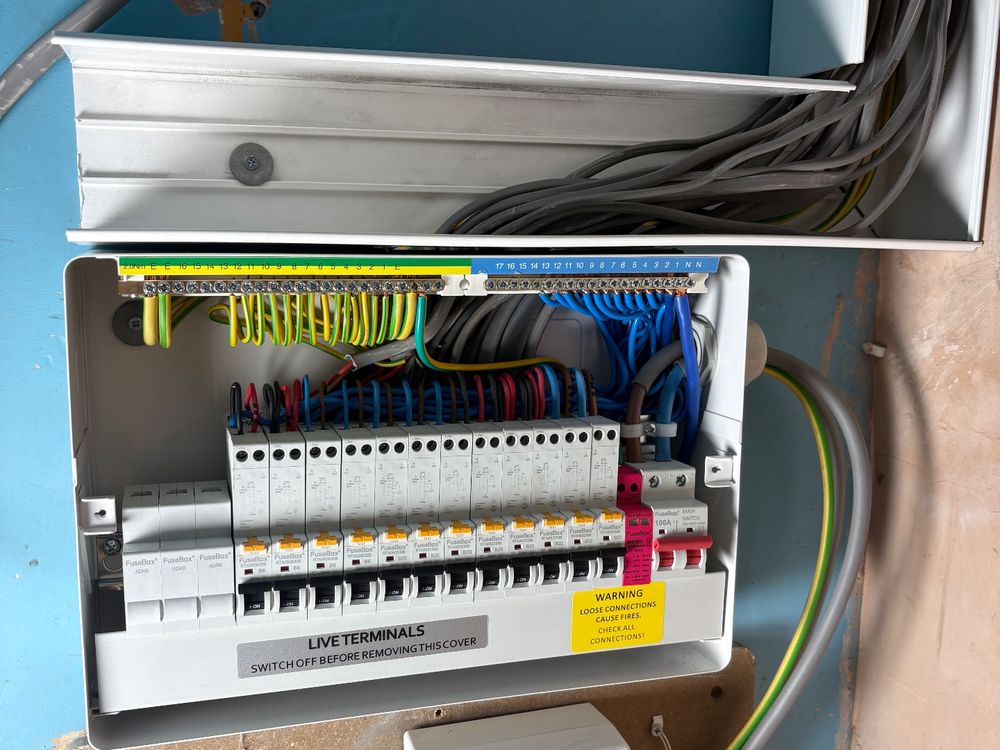
Upgrading a shower is not a like-for-like swap
The most common mistake is fitting a more powerful shower onto the circuit that fed the old one. A jump from a modest unit to a high-output one is a substantial increase in current, and the existing cable and protective device were sized for the old figure.
Overloaded cable doesn’t fail dramatically. It runs warm, degrades over years, and shows up eventually as a nuisance trip or a scorched connection. Get the cable sized for the shower you’re actually fitting.
What we check
- Cable size against the shower’s rating and the length of the run.
- The protective device, and RCD protection for the circuit.
- Whether the consumer unit has a spare way and can carry the load.
- The main supply fuse — a big shower plus an EV charger plus an electric hob can add up beyond what the incoming supply allows.
- The pull-cord isolator, which is a required means of isolation and a common point of heat damage.
Bathrooms are a special location under the wiring regulations — zoning, supplementary bonding where required, and correct IP ratings all apply. It’s one of the areas where DIY and general-trade work most often gets coded on an EICR.
Immersion heaters
Immersions are simpler but the same principle applies: a dedicated circuit, correctly rated cable, a double-pole switch, and a working thermostat. Where a cylinder has two elements they’re normally on separate switching so you can heat part of the tank cheaply.
An immersion that trips the breaker is usually a failed element rather than a wiring fault. That’s a plumbing replacement rather than an electrical one, and we’ll tell you which it is rather than replacing a breaker and hoping.
Worth combining
If the board is being worked on for a shower circuit anyway, that’s the cheap moment to deal with anything else outstanding — a board upgrade, an extractor fan, or additional sockets. One visit rather than three.
Things people ask
Can I fit a more powerful shower on the same circuit?
Often not. A higher-output shower draws considerably more current, and the existing cable and breaker were sized for the old unit. We check cable size and board capacity before you buy, which is quicker and cheaper than after.
Why does my shower trip the RCD?
Commonly a failing element letting moisture reach the heating circuit. Sometimes it’s the isolator switch, which sits in a damp environment and suffers. Testing tells you which rather than replacing parts speculatively.
Do I need a pull-cord switch?
The circuit needs a means of isolation, and in a bathroom that’s normally a ceiling-mounted pull-cord because of the zoning rules. If yours is discoloured or warm, it needs looking at.
My immersion heater keeps tripping. Electrical or plumbing?
Usually a failed immersion element, which is a plumbing replacement. We’ll test and tell you plainly which it is instead of guessing.