House rewires done in a way you can live with.
A rewire is the most disruptive electrical job there is, so how it’s run matters as much as how it’s wired. We work room by room where that suits you, keep the dust down, and leave you with a fully certified installation.
Does your house actually need rewiring?
Plenty of houses get rewired that didn’t need it, and plenty limp on that should have been done years ago. The honest answer usually comes from an inspection rather than a guess, but there are signs worth knowing.
Signs that point towards a rewire
- Rubber, lead or fabric-covered cable anywhere in the property — that’s pre-1960s wiring and well past its life.
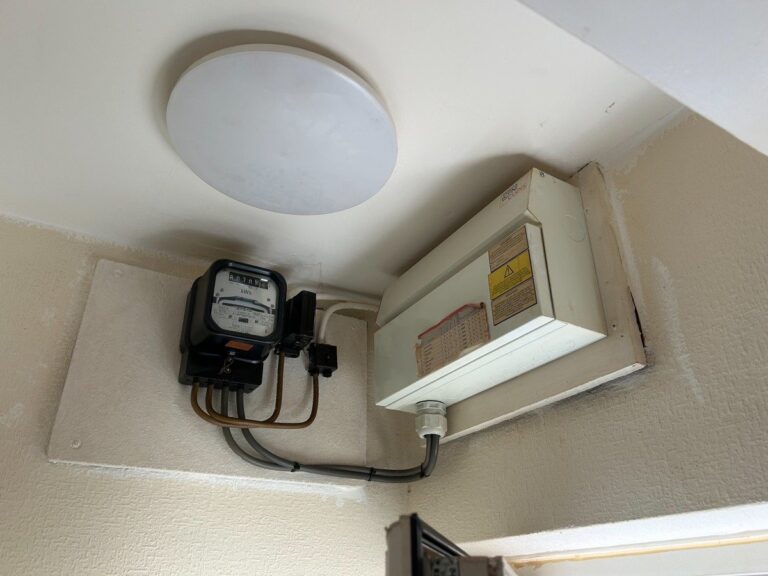
- A fuse box with rewireable fuses rather than breakers, often alongside no RCD protection at all.
- Round-pin sockets, or sockets mounted in skirting boards.
- Not enough sockets, so most rooms run on extension leads.
- An EICR that has come back with multiple C1 or C2 codes across different circuits.
One tired circuit doesn’t mean the house needs stripping back. Where a property only has problems in one area, a partial rewire of those circuits is usually the sensible answer, and we’ll say so rather than quoting for the whole house.
Full rewire or partial rewire
A full rewire replaces every cable, accessory and the consumer unit, back to bare walls. It’s the right call when the wiring is uniformly old, or when the property is empty and being renovated anyway.
A partial rewire deals with the circuits that are actually failing — commonly the kitchen, an old immersion circuit, or lighting that’s been extended badly over the years — and leaves sound cabling alone. It costs less and takes less time, and on a lot of 1970s and 1980s houses it’s the proportionate answer.
Occupied houses: we’d normally do a full rewire in stages so you keep power and heating throughout, rather than turning the whole place off for a fortnight. It takes slightly longer overall but the house stays liveable.
What actually happens
First fix
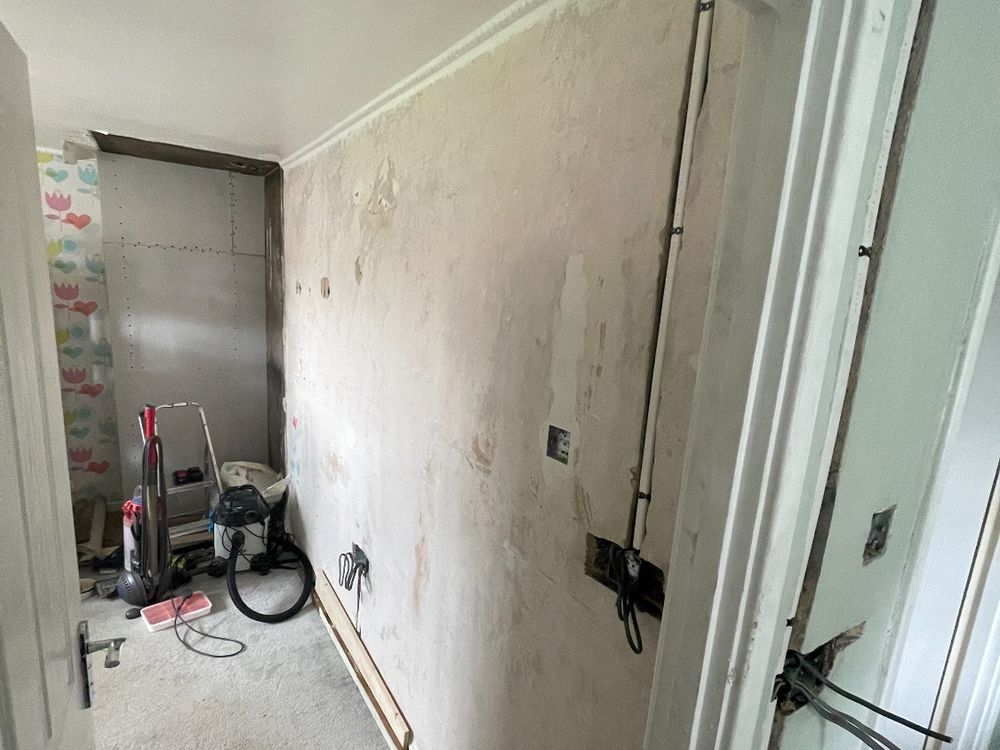
Floorboards up and chases cut, new cable run to every socket, switch and light position, back boxes fitted. This is the messy stage. Where a room is staying decorated we’ll route around it rather than through it wherever the layout allows.
Second fix
Sockets, switches, lights and the consumer unit fitted and connected, every circuit labelled properly so the board makes sense to whoever opens it next.
Testing and certification
The whole installation is tested to BS 7671, the UK wiring standard, and you get an Electrical Installation Certificate. A rewire is notifiable work under Part P of the Building Regulations in England and Wales, so it’s registered with Building Control — that certificate is what a solicitor asks for when you sell.
Making good
We fill and make good chases and lifted boards. We’re electricians, not plasterers, so the finish is ready for decorating rather than decorated — worth knowing before you book a decorator for the same week.

Tell us about the property.
Full or partial, lived-in or empty — roughly how old the house is and whether you'll be living in it during the work gets the first number close. Free quotes, no callout charge.
Things people ask
How long does a rewire take?
For a typical three-bedroom house, most of a working week to a fortnight, depending on whether it’s empty or occupied and whether it’s a full or partial rewire. Occupied houses done in stages take longer because we keep circuits live as we go.
Do we have to move out?
Usually no. Staging the work means you keep power, heating and hot water. Empty properties are quicker and cheaper because there’s nothing to work around, so if you’re rewiring between tenancies or before moving in, that’s the moment.
Will it be certified?
Yes. You get an Electrical Installation Certificate, and the work is notified under Part P because a rewire is notifiable. That paperwork matters when you come to sell, let or insure.
Can you just do the upstairs?
Yes — that’s a partial rewire and it’s a common request. We’ll tell you honestly if the circuits you’re leaving are sound enough to leave, because there’s no point rewiring half a house onto wiring that’s about to fail.
Other work we take on.
Consumer unit upgrades
Old fuse boards replaced with modern RCBO units, tested and certified.
Learn more →